

ClimBEco PhD students
Recruitment to the ClimBEco programme is open during the spring and accepted PhD students begin in August the same year.
Accepted PhD students are enrolled during two years of their PhD studies. There are two groups of PhD students in the ClimBEco programme at any given time. Below is a list of our current ClimBEco groups, group 15 (2025-2027) and group 14 (2024-2026). The PhD students are alphabetically ordered by first name, with a brief description of their PhD research.
Group 15 (2025-2027)

Abigail Starkey
Department of Earth and Environmental Sciences, Lund University
I am working on the MISTRA BioPath Project, developing methods to assess the impact of agricultural practices on biodiversity. My research supports the creation of a certification scheme that links agricultural land use and management with ecological outcomes. I analyze existing certifications and agricultural practices to understand which indicators are currently used and how effectively they capture biodiversity values.

Alexandra Barry
Department of Biological and Environmental Sciences, University of Gothenburg
My research focuses on how warming and other environmental changes in the Arctic tundra drive changes in plant community productivity through shifts in functional traits and community assemblages (such as boreal shrub encroachment). I will use a combination of growth chamber experiments and field observations to tackle this question.

Alice Gredeby
Department of Biology, Lund University
In my PhD project I am investigating the link between forest management, fungal communities and the mobilization of DOC and iron. I aim to increase our understanding of how decomposition patterns differ between fungal functional groups depending on their ecology, and how that ultimately affects brownification of surface waters.

Anna-Kristina Voss
Department of Earth and Environmental Sciences, Lund University
My research focuses on modelling grasslands and croplands in a mechanistic way to better estimate how these ecosystems respond to environmental changes or will contribute to ecosystem services in the future. One major focus of my project is on integrating perennial grain crops into the mechanistic ecosystem model LPJ-GUESS to evaluate their potential as sustainable food crops on larger scales in the future.

Blandine Lyonnard
Department of Biological and Environmental Sciences, University of Gothenburg
I am investigating the Arctic tundra ecosystem within the framework of the International Tundra Experiment (ITEX), a long-term Arctic warming experiment examining the ecological impacts of climate change. My PhD research is on a single ITEX site in northern Sweden. Specifically, I aim to address two key questions: (1) Why does warming influence the carbon cycle differently across plant communities (using approaches from plant ecophysiology and soil microbial ecology)? (2) What processes occur during the Arctic winter, a period that remains largely understudied?

Calyne Khamila
Department of Earth and Environmental Sciences, Lund University
I work with big data to extract abstract information that can inform on ecosystem sustainability to better understand climate change in the 21st century.
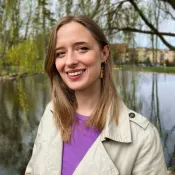
Eliza Cwalina
Department of Design Sciences, Lund University
My research is on aerosol technology, particularly in the context of transitioning to sustainable energy systems. I investigate how alternative energy affects aerosol emissions and human exposure, with applications in aviation and industrial processes. One part of my work involves experimental studies on emissions from sustainable aviation fuels (SAF), while the other focuses on occupational exposure to aerosols in biogas energy plants. The overall aim is to improve understanding of the environmental and health implications of future energy systems.

Emily Register
Department of Earth and Environmental Sciences, Lund University
I investigate the key drivers of drought impacts in boreal forests. Specifically, I aim to determine why the remaining primary forests in Sweden were more resistant to the 2018 drought than managed forests, through a mix of field measurements, tree-core analysis and modelling. This will provide insights into the ways that forest management influences the drought-stability and carbon storage of these ecosystems.

Hampus Holmberg
Department of Biological and Environmental Sciences, University of Gothenburg
I investigate how climate change influences trees in tropical montane rainforests, using natural gradients and experimental manipulation of climatic variables to study responses to a hotter and drier climate. I want to understand the physiological mechanisms underlying these responses as well as different species' ability to tolerate and acclimate to a changing climate, in order to better understand future changes in the community composition of these ecosystems.

Jiahui Lin
Department of Earth and Environmental Sciences, Lund University
Root systems play important yet poorly understood roles in energy, water, and biogeochemical cycles, especially in Arctic tundra. During my PhD, I focus on the responses of Arctic tundra plant root traits to biotic and abiotic drivers and their impacts on ecosystem carbon and nitrogen cycling, with the aim of developing a dynamic root module in LPJ-GUESS that encompasses carbon allocation, dynamic root distribution, and material transport.

Lloyd Villanueva
Department of Space, Earth and Environment, Chalmers University of Technology
My research investigates how warm and moist air intrusions (WAMAI) influence the formation and evolution of multilayer clouds in the Arctic. I use field observations and large-eddy simulations (LES) to study the microphysical processes within these clouds and improve their representation in climate models. This work will help reduce uncertainties in Arctic climate projections, which is crucial for understanding and responding to Arctic accelerated warming.

Lovisa Rosenquist Ohlsson
Department of Earth and Environmental Sciences, Lund University
I am working with geographical information systems and satellite data to explore climate risk and adaptation in the Middle East, with a particular focus on displaced populations.

Oskar Åström
Centre for Mathematical Sciences, Lund University
My research focuses on detecting anomalies and out-of-distribution patterns in a variety of applications. From detecting deforestation and investigating growth patterns in agriculture to breast cancer detection and point-of-care diagnosis, my work focuses on how mathematics and machine learning can be used as an interdisciplinary tool in other research areas in a responsible and transparent way.

Sara Bengtsdotter
Department of Design Sciences, Lund University
My research is on non-exhaust emissions (NEE) from road transport, such as wear particles from brakes, tyres and roads. It involves both laboratory studies to investigate particle characteristics, as well as toxicological studies and workplace exposure measurements. Improving our understanding of these particles and their effect on health and environment becomes increasingly important considering current efforts to electrify the vehicle fleet and can help inform future policy.
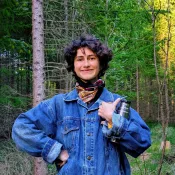
Valentina Wolf
Department of Biology, Lund University
My research is on soil fungal interactions and their impact on biogeochemical nutrient cycles and fluxes of respired CO2 from soils. To this end, I study these interactions at the molecular level by characterizing their metabolites using several spectroscopy methods and studying their biochemical pathways using transcriptomics.

Veronika Widengren
Department of Earth and Environmental Sciences, Lund University
My research focuses on exploring the potential climate benefits of perennial cropping compared to conventional annual cropping systems. Perennial crops, with deep and extensive roots and no-tillage requirements, have the ability to retain water and nutrients and reduce greenhouse gas emissions. My PhD focuses on field measurements of land-atmosphere exchange to compare these two systems.

Xiaojing Yang
Department of Biology, Lund University
My research focuses on the microbial role in carbon sequestration within perennial agroecosystems. More specifically, I aim to understand the microbial contribution in transforming plant-derived labile carbon into a long-persistent soil carbon pool. Additionally, I study the microbial carbon sequestration response under different climate scenarios.

Zhicong Xie
Department of Biological and Environmental Sciences, University of Gothenburg
My research focuses on climate change-vegetation interactions, ecosystem modeling, and the soil-plant-atmosphere continuum (SPAC). Currently, I am working on projects that model the impacts of extreme weather (e.g., drought) on tree growth in both forests and urban areas, spanning scales from local to regional (CoupModel and LPJ-GUESS).
Group 14 (2024-2026)

Anna Litsmark
Department of Architecture and Built Environment, Lund University
The overarching aim of my PhD project is to understand how outdoor lighting in urban neighbourhoods can support children’s independent mobility during dark hours. The empirical part involves children aged 10-13 and their parents residing at different latitudes in Sweden. A key goal of the project is to develop criteria for a child perspective on outdoor lighting.

Anna Schultze
Department of Earth and Environmental Sciences, Lund University
The El Niño Southern Oscillation (ENSO) is the most prominent variability in the Earth climate system. I focus on prolonged ENSO events and investigate their impact on climate, vegetation and society.

Astrid Fridell
Department of Biological and Environmental Sciences, University of Gothenburg
In my project, I evaluate a variety of tree species for their suitability for urban environments in northern Europe under a changing climate. I will do this by experimentally determine which traits make tree species tolerant to hot, dry, and flooded conditions. These are the three main environmental stress factors for urban trees. Results from my study will provide science-based guidelines for making the right tree choice in urban settings.

August Thomasson
Department of Physics, Lund University
My research is focused on anthropogenic emissions of aerosols in Europe. I use atmospheric transport and chemistry models to simulate how aerosols move in the atmosphere and interact with the environment. Combining the models with measurements lets us know how many and which type of particles are emitted. In extension, this will be used to study how anthropogenic aerosols affect human health and the climate.
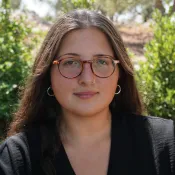
Carmen Margiotta
Centre for Sustainability Studies, LUCSUS, Lund University
My PhD research looks at the complex relations between human societies and glaciers, as climate change accelerates their melting. I aim to identify the divergent risk perceptions tied to changing glacial environments in the Indian Himalayas and the Chilean Andes, with a focus on the less tangible (e.g., cultural) dimensions of risk.

Diana Labastida
Department of Biological and Environmental Sciences, University of Gothenburg
My project aims to unravel the genetic regulation of behind water use efficiency and drought tolerance in common bean (Phaseolus vulgaris) with the final objective of developing new cultivars with higher yield and water use efficiency. The project focus specifically on local Rwandan landraces and part of the project is carried out in Rwanda.

Emilia Ganslandt
Center for Sustainability Studies (LUCSUS), Lund University
My Ph.D. research is focused on how power influence how people perceive, experience, and resist/accept climate adaptation actions at the local scale, specifically in Swedish coastal communities. I am further interested in how justice is or could be better incorporated in climate adaptation discussions.
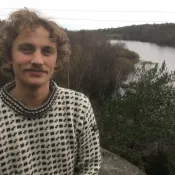
Erik Holmgren
Department of Space, Earth and Environment, Chalmers University of Technology
My research is focused on atmospheric moisture transport at high latitudes, the role it plays in the climate system, and how it might change in the future. Currently, I'm looking at the characteristics and effects on precipitation of atmospheric rivers over Scandinavia. I mostly work with the analysis of climate reanalyses and the output of climate models.

Haoming Zhong
Department of Earth and Environmental Sciences, Lund University
My research primarily focuses on testing and developing the European version of LPJ-GUESS, a dynamic global vegetation model. I will use this developed model to simulate European forests, aiming to gain deeper insights into their ecosystem dynamics. The scope of my projects will emphasize carbon sink assessment, rewilding management and sustainable forest management.

Julia Qian Mao
Department of Political Science, Lund University
My project is focused on the political economy of biodiversity financing. It investigates how biodiversity finance is governed and what factors influence decision-making in biodiversity financing.

Kai Sattler
Department of Biological and Environmental Sciences, University of Gothenburg
My PhD project investigates how Arctic vegetation responds to climate warming by conducting transplant and common garden experiments in environmental chambers and in the field. I explore potential community shifts and changes in key ecosystem processes, such as carbon sequestration, providing important insights into global climate feedback mechanisms.

Leo Håkansson
Department of Chemistry and Molecular Biology, University of Gothenburg
In my PhD project I investigate the formation and properties of secondary organic aerosols. Secondary aerosols form from the oxidation of volatile organic compounds emitted by both anthropogenic and biogenic sources. My work includes drone based vertical sampling, high resolution mass spectrometry, urban and rural environments, chamber experiments, and modelling. Secondary organic aerosol ultimately affects the climate and can be adverse for human health.

Lydwin Wagenaar
Department of Biology, Lund University
During my PhD I evaluate multifunctional forest landscapes called Ecoparks. In these areas, I study the effects of restoration and forestry practices on forest structures and climate mitigation. Furthermore, I study how these multifunctional landscapes and forest structures affect the diversity and species composition of Hymenoptera wasps and saproxylic beetles. The aim of my study is mostly to acquire more information on how to restore biodiversity in forest ecosystems.

Michelle Ochsner
Department of Technology and Society, Lund University
My PhD research is focused on the impacts of extreme weather on railway systems in Sweden and how to adapt railways to climate change. I hope to highlight the importance of creating a railway system that is resilient to the current and future effects of climate change.

Natalia Davila
Department of Biology, Lund University
My PhD focuses on the sublethal effects of pesticides on insect behaviour and physiology, particularly their foraging decisions and floral preferences. Building on previous studies that have shown changes in bumblebee (Bombus Terrestris) floral preferences due to pesticide exposure, I am currently analysing pollen collected by pesticide-treated colonies to explore which flower species bumblebees prefer or reject, the factors influencing these preferences, and how extended pesticide exposure affects their pollination performance.

Sahana Subramanian
Centre for Sustainability Studies, LUCSUS, Lund University
I study the political ecology of glacierised environments in Ladakh, India. I look at how glacierised environments, including artificial glaciers, are produced, constructed, and in some cases contested; and how the territorialization of glaciers impact glacier dependent communities in different ways.

Valentina Schüller
Centre for Mathematical Sciences, Lund University
My research focuses on numerical methods for coupled environmental problems. We analyze and develop (iterative) coupling algorithms for atmosphere-ocean coupling and climate modelling in general, but also models for groundwater flows and river systems

Wan-Ni Lin (Annie)
Department of Earth and Environmental Sciences, Lund University
My project focuses on vegetation fires in the Middle East using remote sensing data. Due to the aggravating climate change and increasing risk of fire weather, the area is projected to confront more and extreme weather events. Therefore, understanding the fire regime in the conflict-stricken context of the Middle East is important, representing an emerging field of interest that has not yet been thoroughly investigated. My goal is then to observe the long-term vegetation fire dynamic and their biophysical and socio-economic drivers to provide deeper insights into the area.
Yuzuo Zhu
Department of Earth and Environmental Sciences, Lund University
My research concerns climate-vegetation coupling with a specific emphasis on modeling the phenology of tropical deciduous forests using the LPJ-GUESS model. Currently, my focus lies on modelling leaf shedding in tropical deciduous forests. This project aims to enhance our comprehension of phenological responses to abiotic drivers from a hydraulic perspective in tropical regions.

Zeynep Ekim Olsson
Environmental Psychology Division, Department of Architecture and Built Environment, Lund University
My research aims to understand user experiences and behaviours through the use of energy-efficient design and technologies in buildings. The research focuses on psychological, physical, and socio-demographical factors that are related to different types of energy-efficient behaviours in buildings. The knowledge gained from this research can be useful in developing new strategies to reduce energy use and promote pro-environmental behaviours.
Participants with extensions

Catalina Quiroga
Department of Human Geography, Lund University
I am interested in analyzing the impacts of climate change on the daily lives of the communities living in the mangroves in the Colombian Caribbean. Specifically, I am interested in understanding the roles of women, black communities, and peasant communities in the construction of landscapes associated with climate change. To achieve this, my goal is to recognize various forms of knowledge related to mangrove conservation and their inclusion as strategic ecosystems in mitigation and adaptation projects.

Jessica Jennerheim
Department of Earth and Environmental Sciences, Lund University
My PhD studies will entail researching how we conduct risk assessments of construction and demolition waste with a focus on terrestrial organisms. The goal is to generate End-of-Waste criteria to contribute to circular use of material and a more sustainable future.